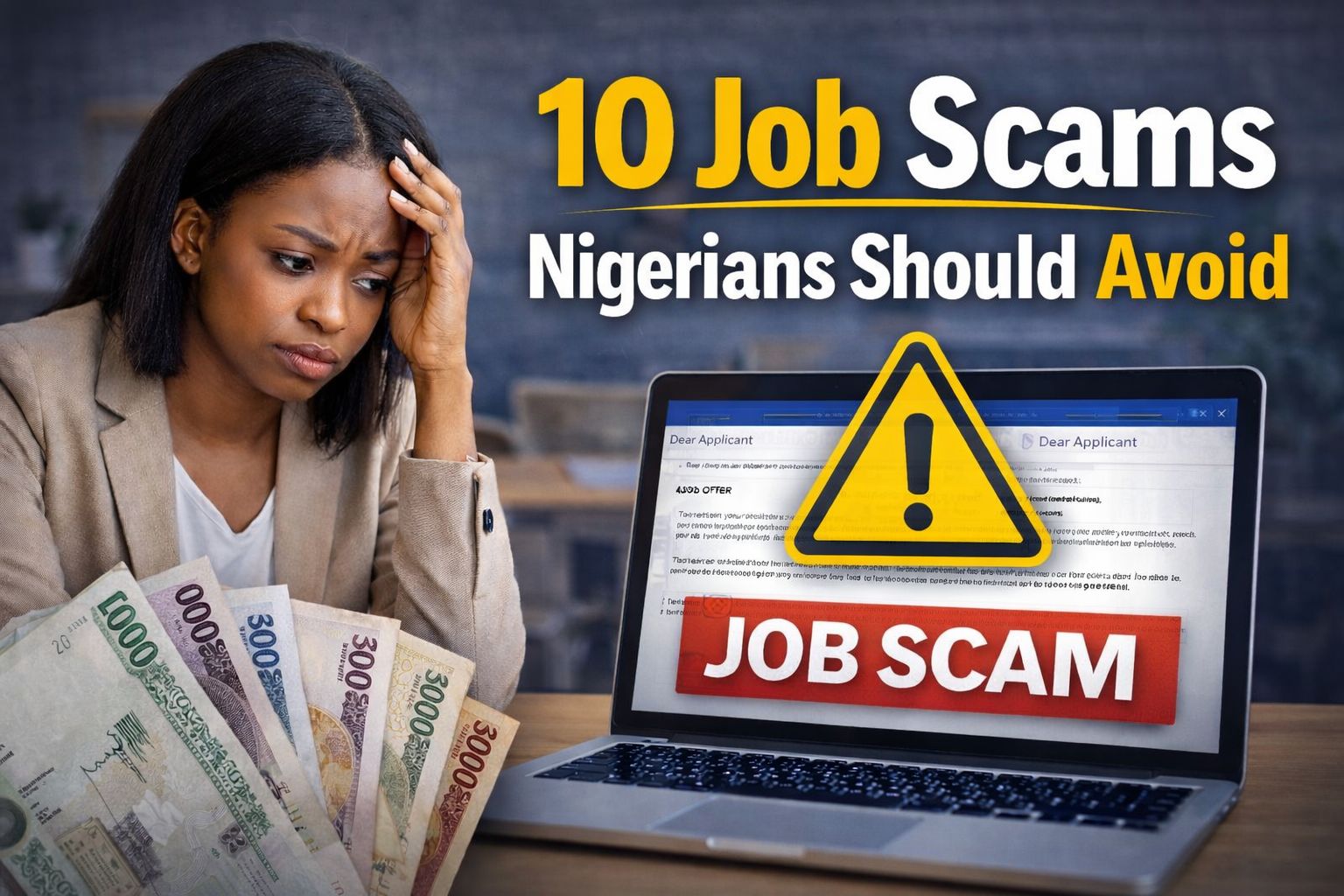
Job scams are becoming increasingly common, especially as more Nigerians search for jobs online and remote work opportunities. Scammers often take advantage of desperate job seekers by promising quick employment, high salaries, or overseas opportunities.
Understanding the most common job scams in Nigeria can help you protect yourself and avoid losing money or personal information.
Here are 10 common job scams Nigerians should avoid.
1. Paying Money Before Getting a Job
One of the biggest red flags in any job application is being asked to pay money before getting hired.
Scammers often ask for:
Application processing fees
Training fees
Interview fees
Legitimate employers do not ask candidates to pay money to secure a job.
2. Fake Recruitment Agencies
Some scammers create fake recruitment agencies that promise to connect job seekers with companies.
They may ask for a registration fee or CV submission fee, but no real job opportunities follow.
Always verify recruitment agencies before engaging with them.
3. Fake Government Job Offers
Another common scam involves fake government job recruitment announcements.
Scammers may claim to have connections that can help you secure jobs in government agencies if you pay a certain amount of money.
Government recruitment processes are official and transparent. No one should ask you to pay to secure such jobs.
4. Overseas Job Scams
Some scammers advertise foreign job opportunities with extremely attractive salaries.
They may request payment for:
Visa processing
Travel documents
Work permits
Always confirm overseas job offers through verified sources before making any payment.
5. Fake Remote Jobs
With the rise of remote jobs, scammers now post fake remote job listings online.
They may ask you to purchase equipment, software, or pay onboarding fees before starting the role.
Legitimate remote employers usually provide equipment or reimburse employees.
6. Job Offers Without Interviews
Receiving a job offer without any interview or proper assessment is a major warning sign.
Professional companies typically conduct interviews, tests, or multiple screening stages before making a hiring decision.
7. Requests for Sensitive Personal Information
Scammers sometimes ask for sensitive information such as:
Bank account details
BVN
National ID numbers
Passwords
Sharing such information can lead to identity theft or financial fraud.
8. Unrealistic Salaries for Simple Jobs
Be cautious of job offers promising extremely high salaries for minimal work.
If the offer sounds too good to be true, it probably is.
Always research salary ranges for similar roles before trusting such offers.
9. Fake Company Websites and Emails
Some scammers create fake company websites or use email addresses that look similar to real companies.
Always verify the official website of the company and check whether the email domain is legitimate.
10. Social Media Job Offers
Many scams now happen through social media platforms and messaging apps.
Be cautious when someone sends you a job offer through WhatsApp, Telegram, or Instagram without a proper recruitment process.
How to Protect Yourself
To avoid falling victim to job scams:
Never pay money for a job offer
Verify companies before applying
Avoid sharing sensitive personal information
Research job offers carefully
Apply through trusted job platforms
Job scams are unfortunately common, but being informed can help you avoid them.
Always be cautious, verify job opportunities, and use trusted job platforms when searching for work.
If you are currently searching for legitimate opportunities, you can explore verified job listings on Job Anchor, where job seekers connect with employers across different industries.